
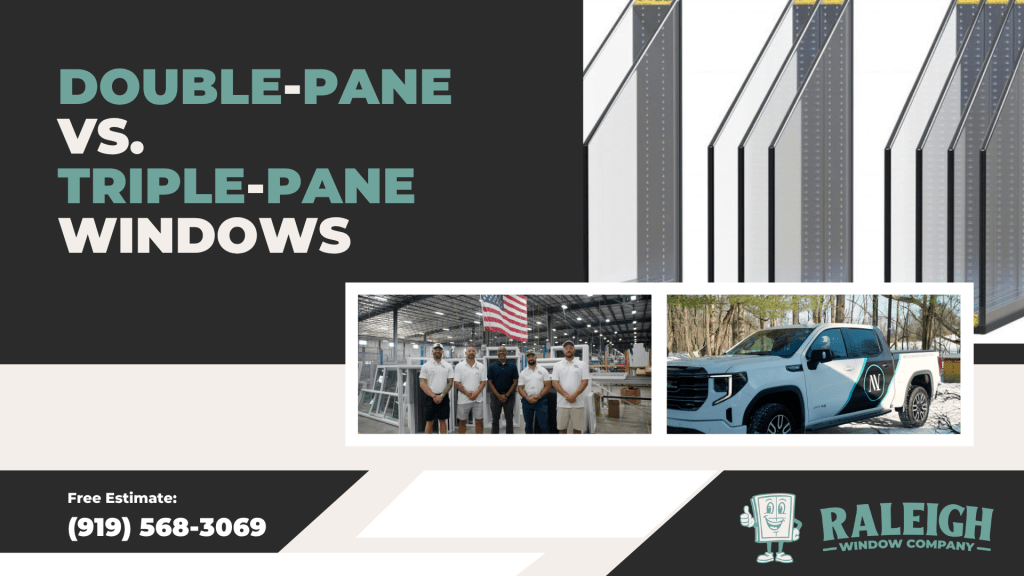
Double-Pane vs. Triple-Pane Windows: Which Is Actually Worth the Money?
Double-pane windows offer solid energy efficiency for most American homes, while triple-pane windows deliver a meaningful upgrade in cold climates but come with a higher price tag and longer payback period. Understanding the real differences between these two options will help you make a smarter investment before replacing any windows in your home.
Key Takeaways
- Triple-pane windows cost 30-50% more than double-pane but only reduce heating bills by 8-15% in cold climates.
- Double-pane windows with low-E coatings and argon gas achieve U-factors of 0.25-0.30, while triple-pane windows hit 0.18-0.22.
- In moderate or warmer climates like the Southeast, double-pane windows offer the better return on investment.
- Noise reduction differences between the two types are modest unless you choose asymmetric laminated glass.
- Payback periods for triple-pane windows typically run 12-18 years, which matters when planning a long-term stay.
- Professional installation quality affects performance more than pane count alone.
What Actually Separates Double-Pane from Triple-Pane Windows

The most straightforward way to think about this comparison is layers of glass and the air space between them. A double-pane window uses two panes of glass sealed together with an argon or krypton gas fill in between, while a triple-pane unit adds a third pane and a second gas-filled chamber.
That additional layer is not just about adding glass. Triple-pane windows also incorporate a second low-emissivity (low-E) coating, a second argon fill, a reinforced spacer system, and a heavier sash frame designed to carry the extra weight. All of those components add up, which is exactly why the price gap exists.
On the energy efficiency side, the numbers tell a clear story. Double-pane windows with low-E coatings typically achieve U-factors in the range of 0.25 to 0.30, which translates to roughly R-3.5 to R-4 insulation value. Triple-pane windows with dual low-E coatings push U-factors down to 0.18 to 0.22, or R-4.5 to R-5.5. According to the U.S. Department of Energy, lower U-factors mean less heat escapes through the glass, which is the primary goal in cold-weather states.
Noise Reduction: What the Numbers Actually Mean
One area where homeowners often overestimate triple-pane performance is noise reduction. The standard expectation is that three layers of glass will block significantly more sound than two. In practice, the difference between standard double-pane and standard triple-pane in Sound Transmission Class (STC) ratings is only about 2 to 4 points.
What matters far more is glass composition. Asymmetric laminated glass, where the panes are different thicknesses or incorporate an acoustic interlayer, performs dramatically better than simply adding a third standard pane. If noise reduction is your primary goal because you live near a highway, airport, or busy intersection, you should be asking window manufacturers specifically about STC ratings and laminated glass options, not simply defaulting to triple-pane.
According to research from the National Institute of Standards and Technology, an STC improvement of 10 points cuts perceived noise roughly in half. That kind of jump requires specialized acoustic glass, not just an extra pane.
Choosing Between Window Brands and Frame Materials
Pane count is only part of the equation. The brand you choose and the frame material affect long-term performance, maintenance, and warranty coverage just as much as whether you select double or triple-pane glass. When comparing major manufacturers, the article covering andersen vs pella vs marvin windows breaks down how these three leading brands differ in construction quality, available glass packages, and pricing.
Vinyl frames remain the most popular choice in the U.S. because they offer strong thermal performance, low maintenance, and a lower price point. Fiberglass frames provide better rigidity and are particularly well-suited for triple-pane units because the frame needs to handle the added weight without warping. Wood and wood-clad frames sit at the premium end and can be excellent but require more upkeep over time.
Check out this related article: Which is The Best Frame Material: Vinyl, Wood or Fiberglass?
The Mayo Clinic’s research on environmental health points out that well-sealed, properly installed windows also reduce indoor allergen infiltration and humidity intrusion, two factors that directly affect home health quality. That is a benefit that applies equally to both double and triple-pane options when installed correctly.
Things to Know
- Triple-pane windows are 20 to 30 percent heavier than comparable double-pane units, which can complicate installation on older homes with narrower rough openings.
- Low-E coating is available on both window types and dramatically improves performance. Do not skip it on double-pane windows to save a few dollars.
- The gas fill inside sealed pane units, typically argon, can slowly dissipate over 15 to 20 years. When that happens, U-factors worsen regardless of whether you chose double or triple-pane.
- Many homeowners in moderate climates find that air sealing and proper window installation technique deliver more measurable energy savings than upgrading from double to triple-pane alone.
- Federal tax credits under the Inflation Reduction Act currently allow a 30 percent tax credit, up to $600, for qualifying energy-efficient windows. Both double and triple-pane options may qualify depending on U-factor and Solar Heat Gain Coefficient ratings.
- ENERGY STAR certification is available for both window types. Always verify certification before purchasing, since marketing language from some manufacturers can be misleading.
Frequently Asked Questions
Q: What are the disadvantages of triple pane windows?
Triple-pane windows cost 30-50% more than double-pane, are significantly heavier, and have payback periods of 12-18 years that rarely make sense outside cold climates.
The added weight strains frame structures and can complicate installation in older homes. In moderate or warm climates, the energy savings are modest enough that the premium cost is difficult to recover over a typical homeownership period.
Q: What is the cheapest time of year to replace windows?
Late fall and winter, typically November through February, tend to offer the lowest prices because contractor demand drops significantly during that period.
Many window companies run off-season promotions to fill their schedules during slower months. The trade-off is working around colder temperatures during installation, though most professional crews handle this efficiently.
Q: Should I buy double or triple pane windows?
For most American homeowners in moderate climates, double-pane windows with low-E coatings and argon gas deliver the better return on investment.
Triple-pane windows make the strongest case in climates where heating is required for five or more months a year. If you live in a zone where winters are cold but not extreme, a well-specified double-pane window will serve you reliably for 20 to 25 years.
Q: Are 20 year old double-pane windows still good?
Twenty-year-old double-pane windows may still be structurally intact, but the argon gas fill has likely dissipated and any low-E coating has reduced in effectiveness, meaning they are performing noticeably below their original specifications.
The primary sign of seal failure is fogging or condensation between the panes. If your windows show that symptom, the insulating gas is gone and replacement makes sense both for energy efficiency and comfort.
Q: Best double pane windows recommendations
Andersen, Pella, and Marvin consistently rank among the top double-pane window brands in the U.S. market based on construction quality, warranty coverage, and available glass packages.
Andersen’s 400 Series and Pella’s Impervia fiberglass line are particularly well-regarded for energy performance. According to Consumer Reports’ window ratings, warranty terms and local installer quality both significantly affect long-term satisfaction, so factoring in your regional dealer’s track record is equally important.
The Bottom Line on Double-Pane vs. Triple-Pane Windows
For most homeowners across moderate climates, the comparison between double-pane vs. triple-pane windows lands clearly in favor of double-pane when you factor in cost, payback period, and realistic energy savings. Triple-pane technology is genuinely superior on paper, but the practical difference in a climate that does not experience sustained extreme cold rarely justifies a cost premium of $250 to $600 per window.
Where Raleigh Window Company can help is in matching the right glass specification, frame material, and brand to your home’s actual needs rather than defaulting to the most expensive option available. Your next step is to get a window assessment from a qualified local installer who can calculate realistic energy savings estimates based on your square footage, existing insulation, and local utility rates. That conversation will give you far more useful information than any general comparison can provide on its own.